Area Guide
The Kota Damansara Industrial & Business Hub, Explained
A practical, independent look at why Kota Damansara has become one of the Klang Valley's most established light-industrial and commercial addresses — and what that means for a business choosing where to locate.
Where Kota Damansara sits in the Klang Valley
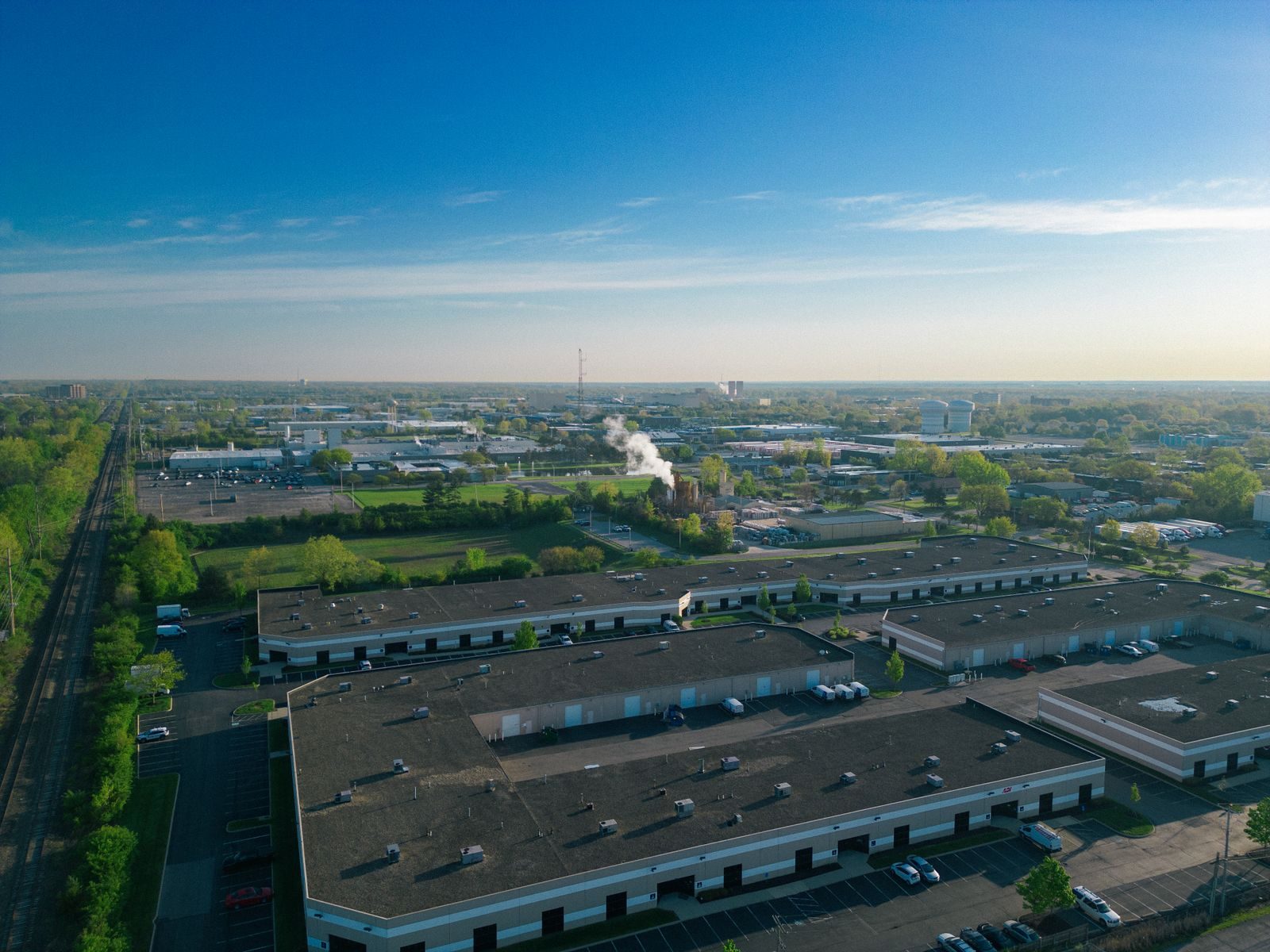
Kota Damansara is a large, self-contained township in the north-west of Petaling Jaya, Selangor, under the jurisdiction of Majlis Bandaraya Petaling Jaya (MBPJ). It occupies a strategic seam between Petaling Jaya, Damansara, Sungai Buloh and Shah Alam — close enough to Kuala Lumpur to draw on its talent pool, yet far enough out to offer the land, road frontage and ceiling heights that light-industrial and logistics users need.
What makes the district unusual is that it blends three uses at once: established residential neighbourhoods, a dense commercial and retail belt, and a mature Kota Damansara industrial zone. That mix is the single biggest reason businesses gravitate here. Staff can live, eat, bank and shop within minutes of the factory floor, and a company's clients rarely struggle to find it.
Kota Damansara is governed by MBPJ and forms part of greater Petaling Jaya — not a fringe industrial estate, but a fully serviced township with industrial land woven through it.
The Jalan Teknologi corridor
The spine of the district's business community is Jalan Teknologi and its network of branch roads (Jalan Teknologi 2, 3, 5 and so on). Originally laid out as a technology and light-industrial park, the corridor has matured into a working address for manufacturers, distributors, trade showrooms, service firms and headquarters offices.
Two characteristics define the corridor. First, accessibility: it feeds directly toward the Surian Interchange and onward to the region's expressways, so goods and visitors move in and out without threading through residential streets. Second, the gradual shift in building stock — from the older single- and double-storey terraced factories that defined the park's first wave, toward taller, stratified and amenity-rich formats that suit modern businesses needing showroom frontage as well as warehouse depth.
It is along this corridor that newer developments such as The NeX, Kota Damansara — a nine-storey stratified industrial business hub on Jalan Teknologi — represent the latest stage of that evolution, placing production, storage, office and customer-facing space inside a single managed building.
Kota Damansara at a glance
How the area evolved
Kota Damansara grew up in stages. Residential phases anchored the population first; the commercial belt around Sunway Giza, The Strand and the surrounding shop-office rows followed as that population matured; and the industrial corridor along Jalan Teknologi developed in parallel to serve light manufacturing, trade and distribution.
The arrival of the MRT Kajang Line, with a station serving Kota Damansara roughly a kilometre from the Jalan Teknologi area, accelerated the district's transition from a car-dependent suburb into a genuinely connected sub-centre. Rail access widened the catchment from which employers can recruit and made the area more attractive to office-style and customer-facing operations, not just back-of-house industry.
The net effect is a district that has aged well. Infrastructure is in place, the road grid is settled, and the surrounding amenity is deep — conditions that are difficult and slow to replicate in a newer, greenfield industrial estate.
Why companies locate here
Workforce and catchment
For most businesses, the deciding factor is people. Kota Damansara performs strongly here. It is ringed by dense, long-established residential neighbourhoods, and its connectivity — the MRT station, the LDP, the DASH and NKVE expressways — extends the realistic commuting radius well beyond the immediate township.
That breadth matters for two reasons. It widens the talent pool an employer can recruit from, covering everyone from warehouse and production staff to engineers, designers and office professionals. And it shortens commutes, which tends to improve retention. The presence of SEGi University and Sri KDU nearby also signals an education-rich catchment, useful for firms that recruit graduates or value proximity to schooling for staff with families.
The character of the district
Kota Damansara does not feel like a conventional industrial estate. Because industry, retail and housing coexist, the streetscape is busier and more mixed than an isolated factory park — there is footfall, there are amenities, and there is life beyond office hours.
For a business, that has trade-offs worth weighing honestly. The upside is convenience, visibility and a ready customer base. The consideration is that land is finite and increasingly built-up, which is precisely why newer projects build upward in stratified, multi-storey formats rather than outward. Understanding where a building sits on that spectrum — older terraced stock versus a modern managed hub — is central to choosing the right premises here.
This is an independent area guide. It is intended to support your own due diligence, not replace it — always verify current details directly before committing.
Explore The NeX KD
Overview
The full project overview — concept, highlights and the at-a-glance numbers.
Learn more →
Specifications
Ceiling heights, floor loading, roller shutters, lifts and power — the full spec sheet.
Learn more →
Unit Types
All unit types A–E, built-up sizes and the complete 242-unit mix.
Learn more →
Request the price list & floor plans
Independent guides to Kota Damansara's industrial market, the industrial-hub opportunity, and The NeX in depth.